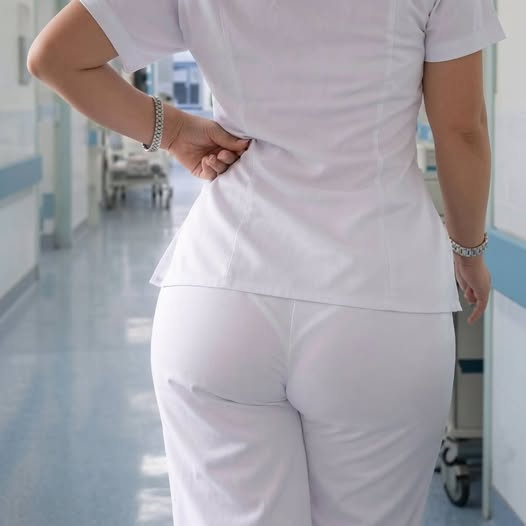

Healthcare professionals work tirelessly around the clock in hospital environments to ensure the highest standards of patient care and safety. In this image, a healthcare worker dressed in crisp white medical scrubs is captured from behind as she walks down a brightly lit hospital corridor. The long, clean hallway features shiny polished flooring, soft blue wall accents, and medical equipment visible in the background blur. Medical personnel often place one hand on their lower back or hip to relieve physical fatigue caused by long, demanding shifts on their feet. The fast-paced nature of clinical environments requires medical staff to stay active, moving swiftly between patient rooms, nursing stations, and emergency units. Wearing comfortable, breathable medical scrubs allows healthcare workers to move freely while maintaining strict hygiene protocols. Hospital corridors serve as critical transit arteries within medical facilities, connecting treatment rooms, diagnostic labs, and administrative offices. Clean and well-lit hallways are essential for preventing operational bottlenecks and ensuring the rapid movement of emergency transport gurneys. Nurses and medical assistants carry out vital daily tasks, including administering medications, monitoring patient vital signs, and assisting physicians during procedures. Long working hours, back-to-back shifts, and constant standing place high physical demands on medical staff members throughout their careers. Implementing proper ergonomic practices and supportive footwear helps healthcare workers manage spinal alignment and reduce occupational lower back strain. Modern hospital designs prioritize clear architectural layouts, non-slip flooring materials, and bright ambient lighting to enhance safety for staff and patients alike. Beyond physical labor, healthcare providers carry significant emotional responsibilities while supporting patients and families through critical medical challenges. Effective teamwork and clear communication among medical staff ensure seamless continuity of care during shift handovers and critical interventions. Medical facilities implement rigorous sanitization protocols along public corridors and clinical areas to minimize the risk of healthcare-associated infections. Short-sleeved medical uniforms are favored in clinical settings because they facilitate frequent hand hygiene and prevent sleeve contamination during procedures. Accessories such as simple wristwatches or bracelets are often worn by healthcare staff to monitor elapsed time accurately during clinical tasks. The dedication demonstrated by nursing teams forms the backbone of effective public health systems and patient recovery outcomes worldwide. Continuing education and specialized skill workshops allow medical personnel to adapt to advancing clinical technologies and updated safety standards. Hospital administration teams work continuously to optimize staffing schedules, offering adequate rest breaks to prevent professional burnout among medical teams. Supportive workplace culture and ergonomic facility adjustments significantly improve job satisfaction and long-term retention rates for healthcare workers. Clean, calm, and organized hospital environments foster a reassuring atmosphere for visiting families and recovering patients. Medical equipment stationed along hallways is kept accessible yet unobtrusive to maintain swift response times during emergency alerts. The constant movement within hospital corridors reflects the continuous, non-stop dedication required to keep healthcare institutions operating smoothly. Patient-centered care models highlight the importance of compassionate, attentive interactions at every stage of a patient’s medical journey. Health services globally rely on the unwavering commitment of frontline nurses, doctors, and allied medical professionals. Modern medical uniforms blend professional appearance, durability, and physical comfort to meet the daily demands of healthcare workers. Workplace health initiatives increasingly focus on providing physical therapy and stress management resources tailored to medical professionals. The quiet focus seen as healthcare workers navigate clinical corridors reflects their deep commitment to upholding public health and patient well-being. Ultimately, the essential contributions of dedicated hospital staff ensure that communities receive reliable, high-quality medical care whenever needed.